
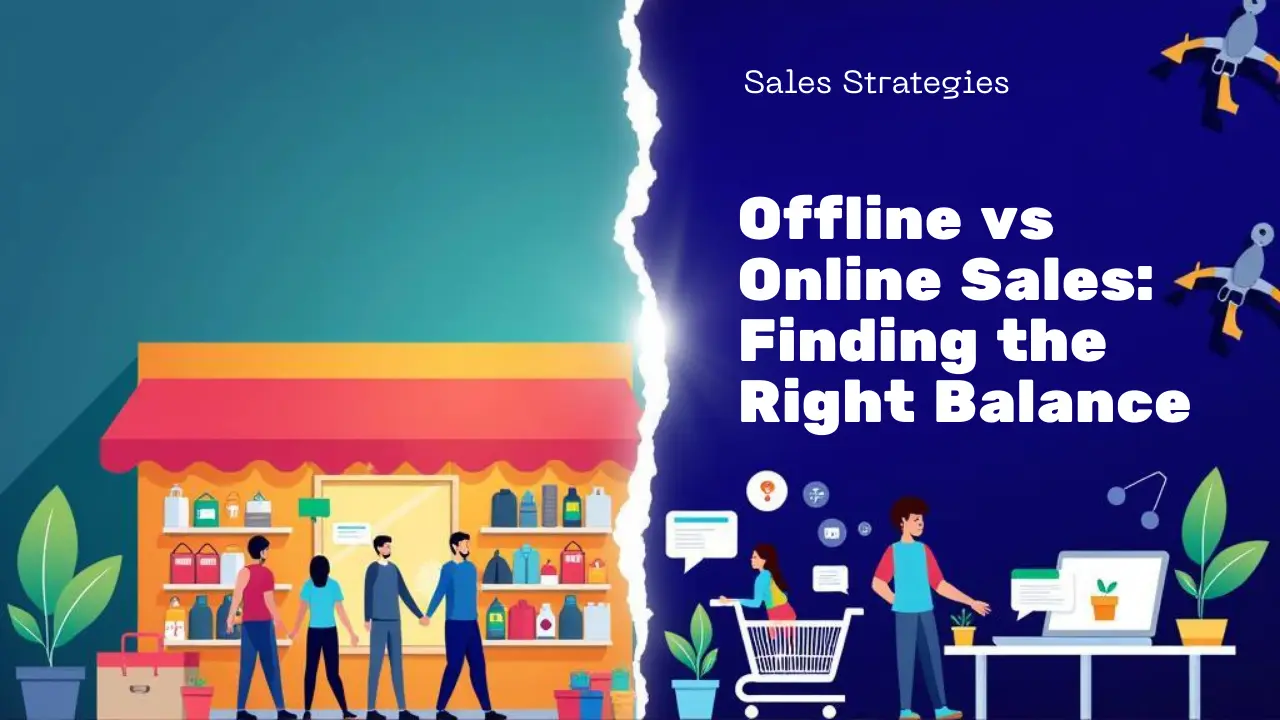
Offline vs Online Sales: Finding the Right Balance for Your Shop
Running a shop in a city comes with strengths many big online sellers envy — trusting relationships, repeat customers, and local knowledge. But customers are changing: they browse online, compare prices, and expect convenience. The smart move isn’t choosing offline OR online — it’s finding the right blend for your shop. This guide shows practical steps to balance both channels, with easy tactics you can implement this week.
Why balance matters (short answer)
- Reach: Online brings new customers beyond your neighborhood.
- Trust & Experience: Offline builds loyalty through personal service and touch-and-feel.
- Resilience: If one channel dips (e.g., footfall drops), the other keeps revenue flowing.
- Cost-efficiency: You can use online tools to lower marketing and inventory risks while offline keeps your margins and relationships strong.
Offline strengths — use them well
- Personal relationships: Customers prefer shops they trust. Use that to upsell and get referrals.
- Instant gratification: No shipping wait — great for impulse buys and urgent needs.
- Low return friction: Easier to handle exchanges and complaints in person.
- Experience-led sales: Try-ons, demonstrations, and local language conversations convert better in person.
Online strengths — low-cost growth tools
- Wider visibility: Social media, marketplace listings, and Google searches help customers discover you.
- Open 24/7: Customers can browse or order anytime — increases sales outside shop hours.
- Targeted promotions: Run low-cost WhatsApp or Instagram campaigns for new arrivals, offers, or slow-moving stock.
- Data & repeatability: Track what sells online and repeat winning combos.
Common challenges — and how to fix them
- Inventory sync problems: Keep a simple stock register (Excel or Google Sheets). Mark items available for both channels.
- Customer experience mismatch: Ensure online images, descriptions, and prices match what’s in-store.
- Logistics: Offer local pickup, or partner with a trusted courier for nearby deliveries.
- Staff resistance: Show staff how online sales add customers, not replace them — and give small incentives for online orders.
A simple, practical 5-step plan to find your balance
- Map your customers: Who buys in-store? Who buys online? (Age, location, purchase size.)
- Choose low-effort online channels: Start with WhatsApp catalog + one social platform (Instagram/Facebook).
- Test fast: Put 20 top-selling items online for 2 weeks. Note which sells and how often.
- Offer hybrid services: Click-and-collect, local delivery within 5–10 km, or reserve-by-call.
- Measure & repeat: Track sales by channel weekly. Move more products to the channel where they convert best.
Hybrid tactics that actually work for small shops
- Click-and-collect: Customer pays online or reserves, picks up in-store — increases footfall and chance of extra purchases.
- WhatsApp broadcast list: Send small, personalized updates (new arrivals, limited offers). Keep messages value-driven and short.
- Local SEO basics: List your shop on Google Business and keep hours & contact updated so local customers find you.
- Offer local delivery days: Fixed delivery days reduce logistic costs and set customer expectations.
Measuring success — what to watch
- Sales split: % revenue from offline vs online (weekly/monthly).
- Customer acquisition cost: How much you spent to get a new customer online.
- Repeat rate: How many customers buy again (higher offline often).
- Average order value (AOV): Online AOV vs in-store AOV — use bundling or free pickup thresholds to increase AOV.
Example mini-case (how a hypothetical shop found balance)
Riya’s garment shop in a Tier-3 city listed 30 bestsellers on WhatsApp and offered free pickup. Within 3 weeks, she sold 10 items via WhatsApp and had 6 customers collect in-store, and each collector bought something extra worth ₹200 on average. Result: more sales with minimal added cost.
SEO & content ideas to attract local customers
- Blog: “Top 10 Summer Kurtis in [Your City] — Available Now”
- Social post: Short video of a new product with price and “DM to reserve” CTA.
- Google Business post: “Weekend offer — free pickup & gift for first 10 orders.”
Quick checklist to implement this month
- Create a WhatsApp product catalog.
- Put up a small “Reserve Online, Pickup In-Store” sign at the shop.
- Collect customer WhatsApp numbers at checkout.
- List your shop on Google Business and update hours.
- Run one small WhatsApp broadcast promoting the 5 top items.
Final words + CTA
You don’t need a full tech overhaul to benefit from online channels. Start with what you already have — your customers, products, and relationships — and add simple online tools that amplify them. Small, consistent experiments will show you the best balance for your shop.
Want help putting a practical plan in place for your shop — including WhatsApp catalog setup, a simple inventory sheet, and a 30-day action plan? I can create a customized, step-by-step playbook for your store. Just say “Yes — make my playbook” and tell me your shop type (garments, general store, footwear, etc.).
This idle tycoon is a blast! merge battle cars idle tycoon offers satisfying progression with its car merging and strategic combat. It’s perfect for those who love building up an empire while keeping things casual. Definitely worth checking out if you enjoy idle games with a bit of a punch!